Here's a number that breaks the brain a little: the game No Man's Sky ships with roughly 18 quintillion planets. Not 18 thousand. Quintillion — an 18 followed by eighteen zeros. No studio on Earth has enough artists, time or hard drives to hand-build that. So how do you fill a universe nobody could possibly model by hand?
You don't model it. You write the rules that model it, and let a computer do the building. That's procedural modeling, and once it clicks, you start seeing it everywhere — in games, in films, and increasingly in how architects generate buildings and whole cities.
The core idea: store the recipe, not the cake
Traditional 3D modeling is hand-craft. You place every vertex, pull every face, position every tree. It's precise and it's slow, and the file you end up with is a giant list of finished things.
Procedural modeling flips that. Instead of storing the finished scene, you store a set of instructions — algorithms and parameters that describe how to build it — and the geometry gets generated on demand. The analogy that sticks: traditional modeling hands you a baked cake; procedural modeling hands you the recipe. The recipe is smaller, you can bake it a thousand times, and changing one line — "more sugar," or in our case "taller buildings" — re-bakes the whole thing instantly.
That difference is the whole reason it scales to quintillions.
How it actually works
Strip away the mystique and procedural modeling is a pipeline of three things: base shapes, operations, and parameters.
Base shapes are the starting clay — simple primitives like cubes, spheres, cylinders and planes, or richer things like curves, splines and meshes. They can even be generated from math: a formula in, a surface out.
Operations are the moves you apply to that clay: extrude, bevel, subdivide, rotate, scale, translate, duplicate, deform, add noise, blend. Run them in sequence, or in parallel, and a plain cube becomes a window becomes a façade becomes a tower.
Parameters are the dials on each operation — intensity, direction, frequency, amplitude. And here's the part that makes it powerful: a parameter doesn't have to be a fixed number. It can depend on something else — position, time, distance, angle, or a wash of random noise. Tie a building's height to its distance from a city centre, and you've described a skyline that thins out toward the suburbs without placing a single building yourself.
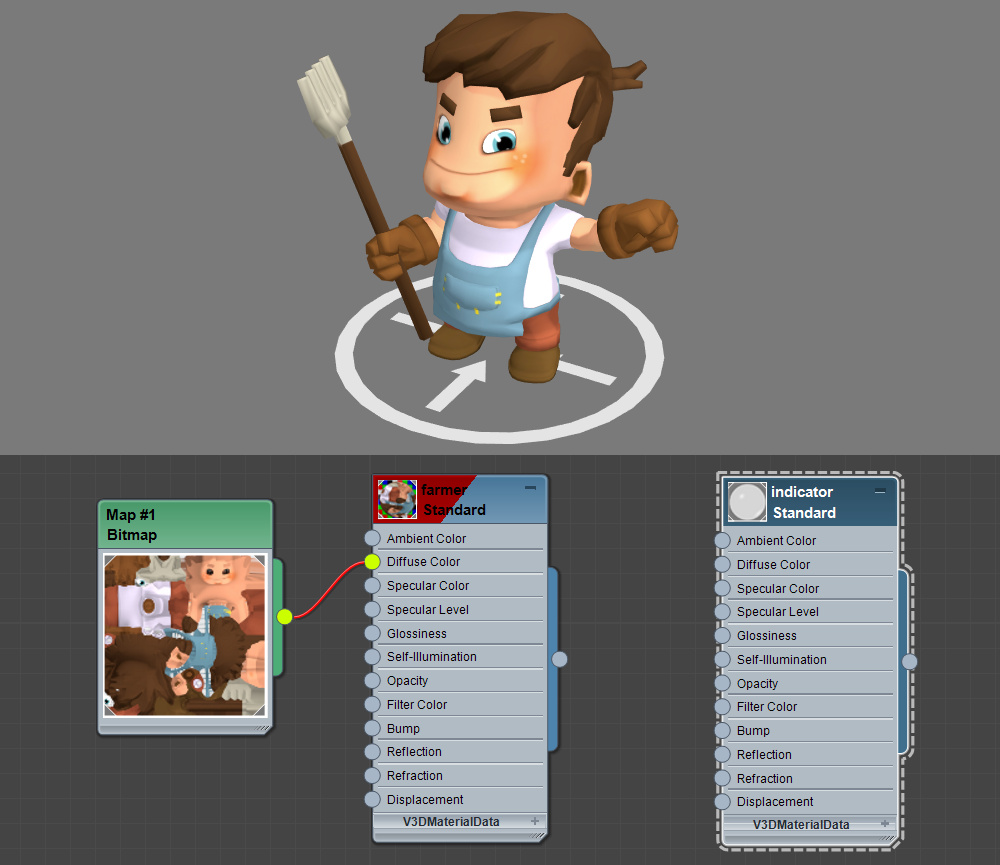
The output isn't a dumb mesh, either. It's a node graph — a hierarchy where each node holds a shape or an operation, every node keeps its own editable parameters, and nodes wire into each other to form relationships. Change a node near the top and the change ripples down the whole tree. That's why a procedural city can be re-rolled endlessly: feed it a new random seed and the same rules generate a brand-new, equally-coherent city.
The trade-off, honestly
Procedural modeling buys you a lot, but it isn't free.
On the win side: it's efficient — a recipe costs far less memory than a fully-stored scene. It's varied — infinite versions from one rule set and a changed seed. It's consistent — everything obeys the same rules, so it hangs together. It's customizable — turn a dial, get a different style. And it's reusable — the same node graph builds different scenes for different jobs.
On the cost side: it's complex — you're essentially programming, which is a wall for non-coders. It's unpredictable — randomness and a stray error can hand you nonsense. And it has limits — some shapes and effects still need a human artist's hand, because no rule captures them.
| Aspect | In short |
|---|---|
| Definition | Generating 3D models and textures from algorithms and rules, without manual modeling |
| Strengths | Complex, varied, consistent scenes; saves time and resources |
| Weaknesses | Hard to control; can produce surprises; limited for some bespoke forms |
| Applications | Games, film, architecture, engineering |
| Methods | Operations applied to base shapes, driven by parameters and algorithms |
| Tools | Houdini, Substance Designer, World Machine, Unreal Engine, CityEngine |
Where you've already seen it
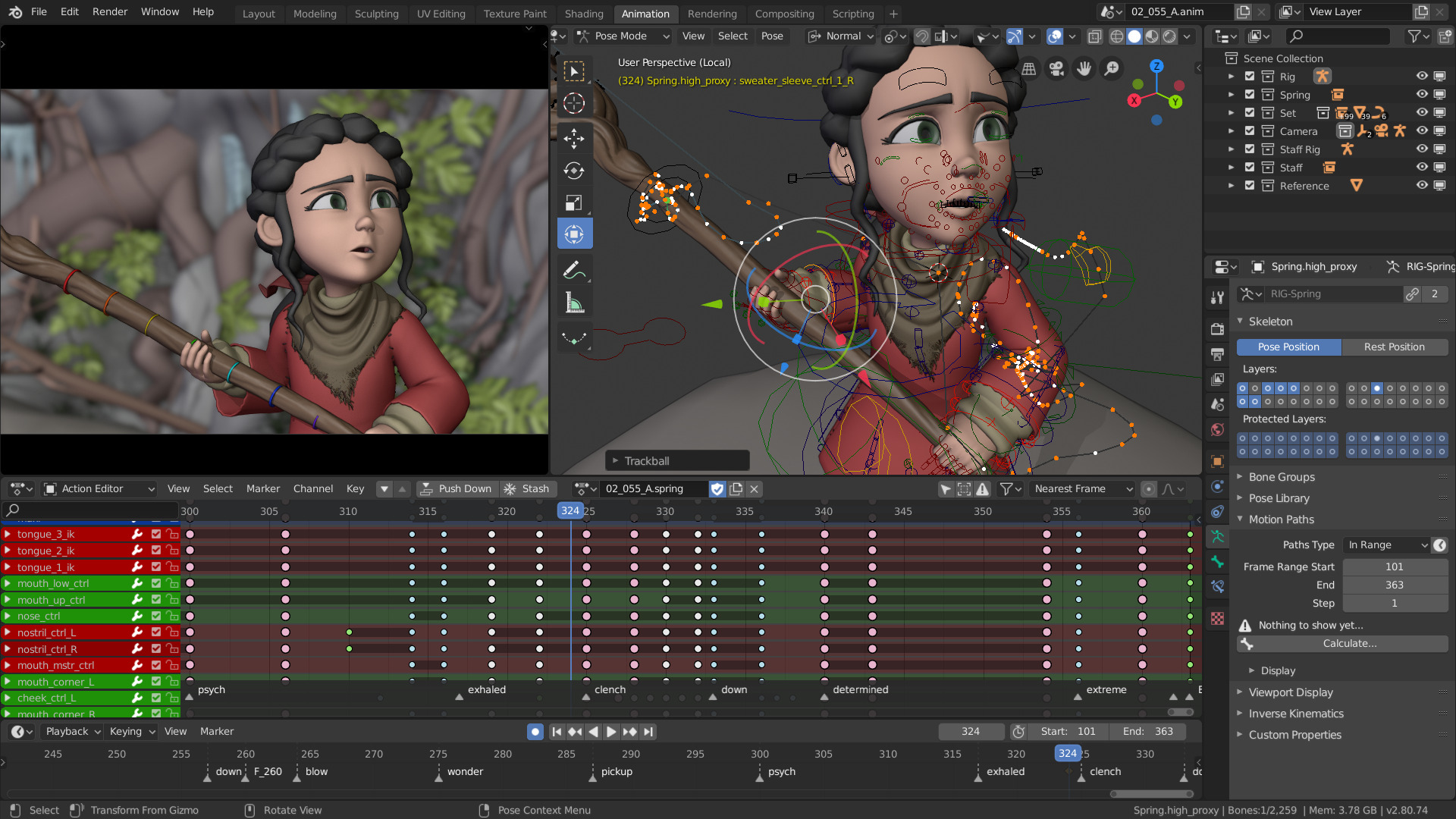
- Games: the worlds you can't believe were built by hand, because they weren't — Minecraft, No Man's Sky, Spore, Elite Dangerous. The same thinking lives inside serious tools like 3D Studio Max.
- Film: vast, believable effects and environments — Avatar, Star Wars, Lord of the Rings, even the snow simulation work behind Frozen.
- Architecture: designing and visualizing buildings and whole cities at a complexity no one could draw by hand — CityEngine, SketchUp, Revit and Rhino all lean on procedural ideas.
- Engineering: simulating and optimizing physical systems with accuracy and speed — ANSYS, MATLAB, SolidWorks and Blender.
The bottom line
Procedural modeling is, at heart, a shift in what you make: you stop building the object and start building the system that builds the object. That's a harder way to think and a far more powerful one — it's the only reason a single small team can hand you a universe.
It rewards a specific blend of creativity and logic, and like any real skill it comes with practice and a lot of experimentation. Start small, change one parameter at a time, watch what the rules do — and at some point a cube turns into a city, and you realise you didn't place a single brick.